Maximize your chances for seeing the northern lights
Welcome to the World of Northern Lights
Hi, I’m Jari – or Jarcce – and I invite you to join me on the adventure of a lifetime, to a place where the night sky comes alive and silence turns into a story.
Over the past seven years, I’ve spent countless nights under the stars of Lapland – and I’ve learned a lot about what it takes to experience a successful Northern Lights hunt. In this blog, I’ll share the most important tips for those who dream of witnessing the auroras with their own eyes.
The Northern Lights are more than just a light phenomenon. They’re a story – one that has fascinated humankind for thousands of years.
Tales from the Sky
The Northern Lights hold a special place in many cultures. The Sámi people saw them as the dance of departed souls. In Japanese tradition, they are signs of love and happiness. Chinese legends describe them as the playful movements of celestial dragons.
When you stand in the quiet of a winter night and see the sky light up, you can feel a connection to generations past. What must the Vikings have thought as the auroras flamed across the heavens – long before science offered an explanation?
What Are the Northern Lights?
The Northern Lights occur when charged particles from the Sun collide with Earth’s atmosphere, causing oxygen and nitrogen molecules to glow in beautiful colors.
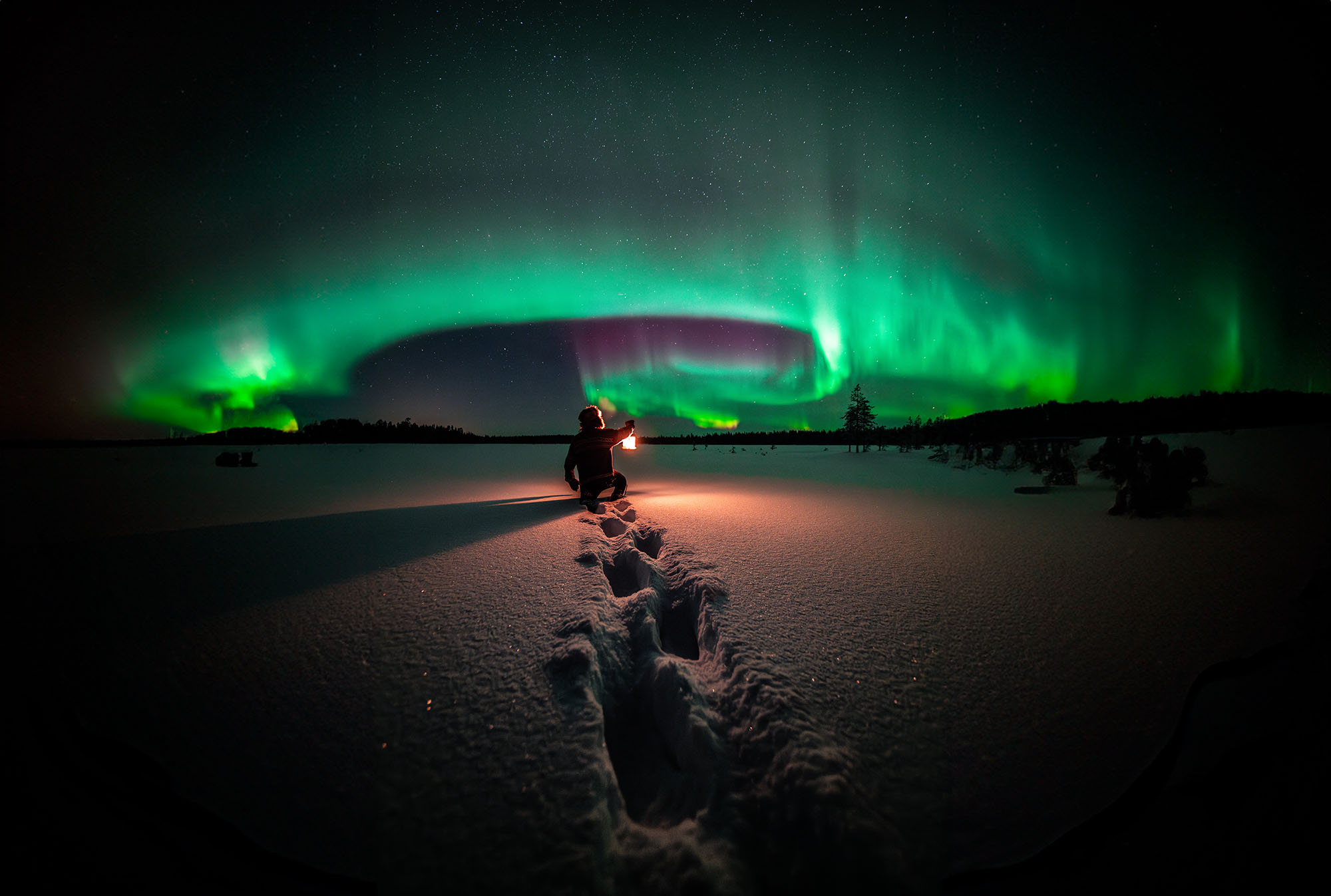
The colors and shapes of the auroras vary. Green is the most common color and is produced by oxygen reactions. It’s usually the first color you see when the Northern Lights appear on the horizon. Other colors typically only show up when the display is particularly strong.
Red and pink auroras are created higher up in the atmosphere. Red is rarely clearly visible to the naked eye, but pink can often be seen during powerful auroral outbursts. Blue and purple hues indicate nitrogen’s involvement in the phenomenon, but seeing these colors is extremely rare.
The dancing lights in the sky are a vivid reminder of the interaction between the Sun and Earth’s magnetic field.
Where and When to See the Northern Lights
Hunting for the Northern Lights is essentially a hunt for clear skies. There’s no single “best” place to find them – the ideal location constantly changes depending on the weather. In general, auroras are most common near and north of the Arctic Circle.
During the 2024–2025 season, the Ranua region (in southern Swedish Lapland) offered some of the best weather conditions. I witnessed dozens of spectacular displays right from my backyard. Norway, on the other hand, was often cloudy – statistically much more so than southern Lapland.
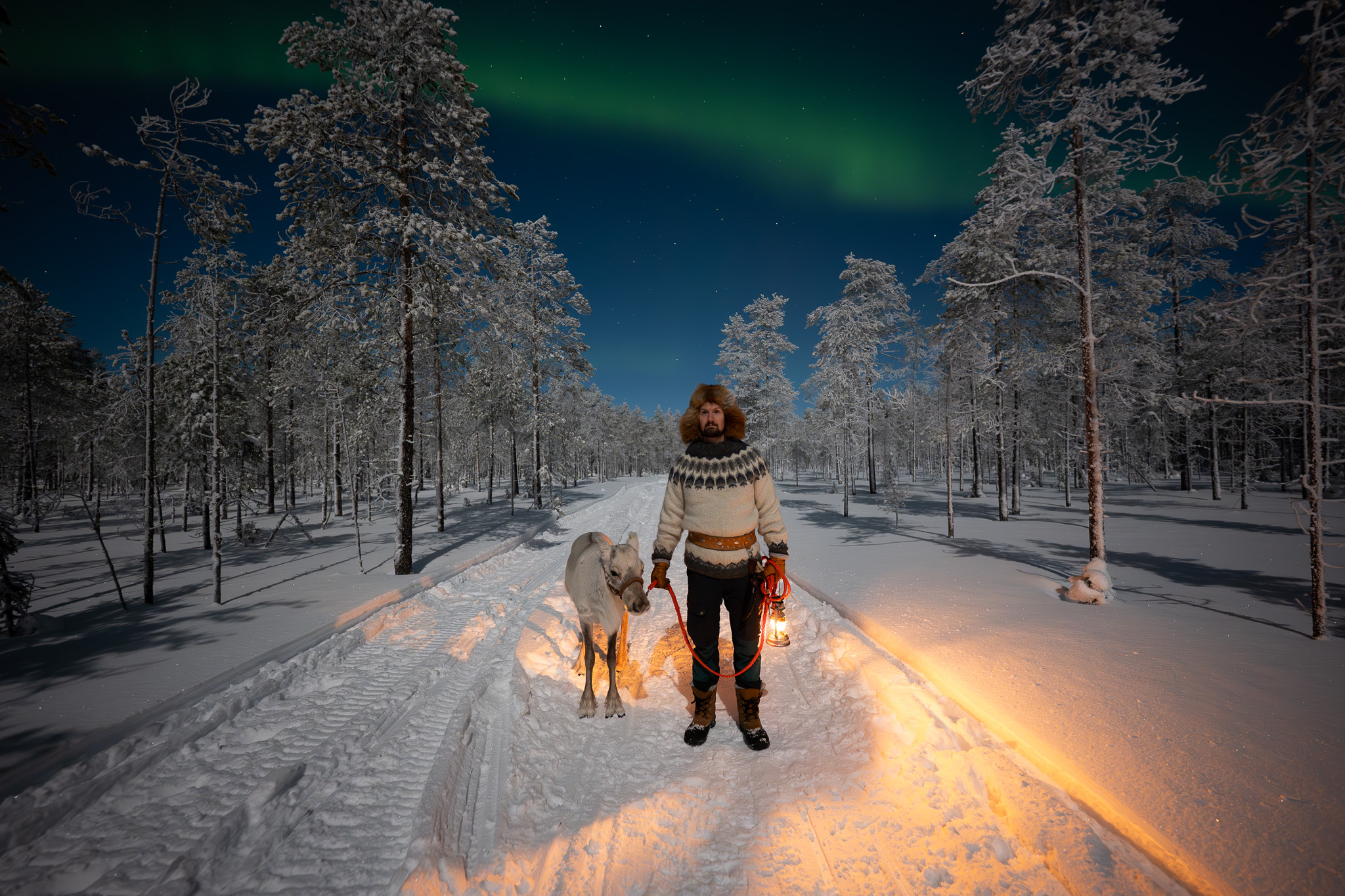
The Northern Lights season runs from early September to mid-April. The best times of year are around the equinoxes: September–October and again in March–early April. That’s when Earth’s magnetic field is best aligned with the solar wind. Midwinter is usually quieter in terms of auroral activity, but it brings its own kind of magic – especially under a full moon.
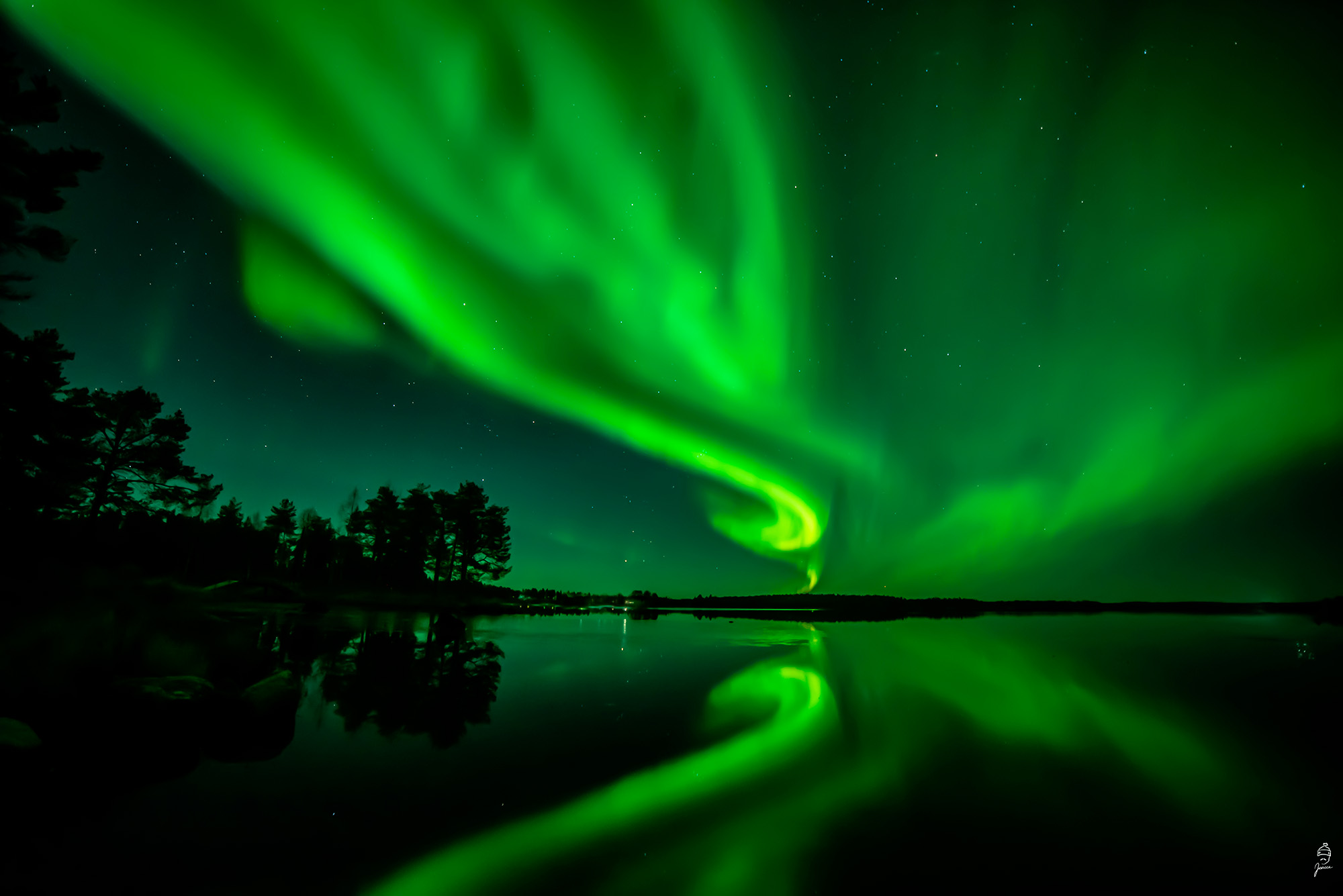
In the autumn, auroras can reflect beautifully off calm water. In winter, the snow adds a special magic to the scene.
How to Prepare for an Aurora Hunt
When chasing the Northern Lights, be ready for cold conditions. Dress warmly: merino wool, insulating layers, winter boots, gloves, a good jacket, and warm trousers are essential. Sometimes you may wait for hours, so snacks are a good idea. On our guided tours, we bring a portable fire pit so we can build a campfire responsibly – leaving no trace. Waiting around the fire makes the experience much more enjoyable.
Be mindful of local people and private properties. Don’t approach houses or enter private yards. Near populated areas – and especially when driving – act visibly and predictably. Never park your car on the road; use designated lay-bys or parking spots. If you’re walking near a road, make sure drivers can see you. When turning onto smaller roads, don’t block access. And if signs indicate logging activity, be especially cautious – large timber trucks can’t stop quickly, and the danger is real.
How to Predict the Northern Lights
Satellite data offers the most accurate prediction of auroras in the next couple of hours. Don’t rely solely on the KP index – it’s one of the least reliable methods because it reacts too slowly to real-time changes. I’ve seen incredible displays when the KP was only 1 or 2. Likewise, even a high KP doesn’t guarantee a strong show.
Get under a clear sky – a car or a skilled guide can be an invaluable help.
Use the right apps and tools:
Cloud maps: Windy
Aurora alerts: Aurora Alert Realtime, My Aurora Forecast
Live aurora cameras: Aurora Alert Realtime, Aurora Webcams, My Aurora Forecast
Satellite data: Jemma.mobi